The Short Answer? The Science Says Yes — With the Right Protocol
Hair loss affects roughly 50% of men and 25% of women by age 50, and it remains one of the most emotionally charged concerns clients bring into the treatment room. As aesthetic professionals, you’re being asked about microchanneling for hair restoration more than ever — and for good reason.
Procell Therapies has emerged as one of the most talked-about protocols combining automated microchanneling with topical serums to address androgenetic alopecia (AGA). But beyond the before-and-after photos, what does the clinical evidence actually say? And how do you apply that evidence within Health Canada’s current regulatory framework?
Let’s break it down.
What Is Procell Microchanneling for Hair Restoration?
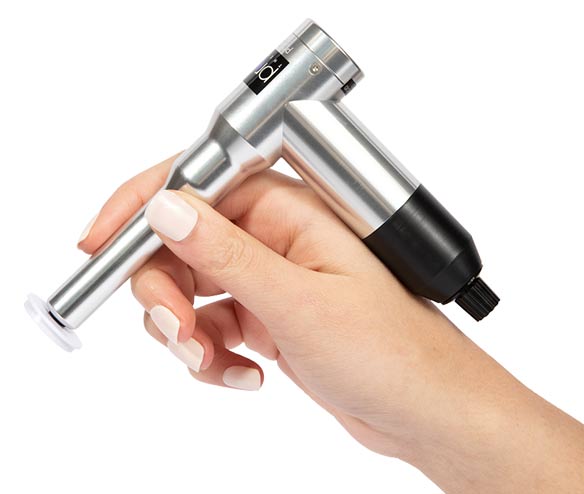
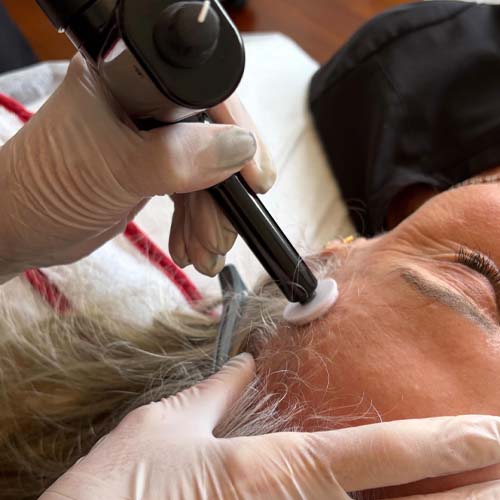
Procell is an automated microchanneling system that uses a stamp-style device with 33-gauge needle cartridges to create precise, controlled micro-channels in the scalp. Unlike traditional rollers, the vertical stamping motion minimizes epidermal tearing and allows for consistent needle depth — a critical variable, as you’ll see in the research below.
The mechanism of action for hair restoration centres on two primary pathways:
- Wound-healing cascade activation: microchanneling triggers a controlled inflammatory response that stimulates dermal papilla cells, the key regulators of the hair growth cycle.
- Enhanced topical delivery:channels created in the scalp transiently increase permeability, significantly improving the absorption of topically applied actives.
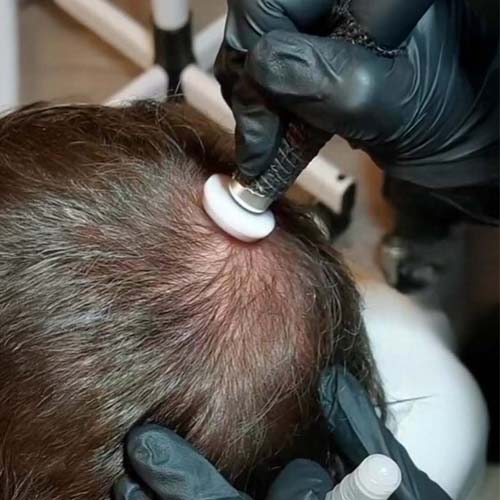
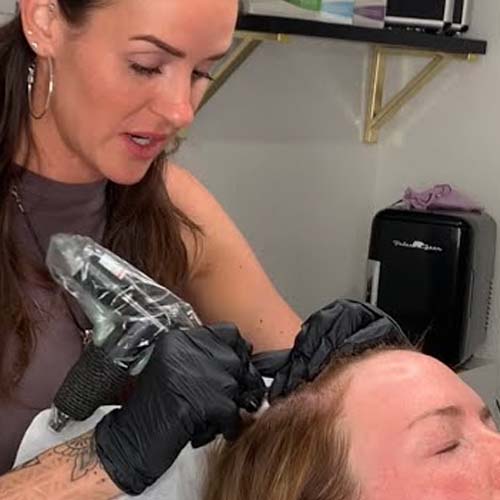
How to Build a Results-Driven Procell Hair Protocol
Based on the clinical literature and real-world outcomes, here is a framework for your practice:
Recommended Treatment Parameters
- Device depth: 0.5–0.6 mm (supported by strongest evidence for hair count and thickness outcomes)
- Frequency: Biweekly (every 2 weeks) for the first 12 weeks; monthly maintenance thereafter
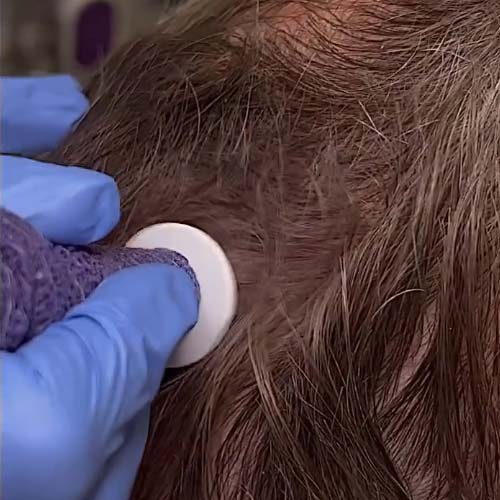
- Session speed: Mid-range speed settings to create controlled pinpoint bleeding — this is the visual indicator that the wound-healing cascade has been initiated
- Technique: Straight passes with lift between strokes; avoid aggressive rolling or lateral dragging on the scalp
Pre-Treatment Preparation
- Topical anaesthetic (e.g., lidocaine/prilocaine compound) applied 30–45 minutes prior
- Scalp cleansed with saline and povidone-iodine post-anaesthetic removal
- Photography taken at each visit (standardized lighting, angle, distance) — this is non-negotiable for tracking outcomes and protecting your practice
Post-Treatment Care
- Scalp kept dry and free of styling products for 24 hours
- Sun avoidance for 48 hours
- Compliant topical serums (Health Canada-approved) applied immediately post-treatment while channels are open, and continued at home between sessions
Client Selection
Best candidates for Procell hair restoration:
- Norwood Scale I–IV (men) or Ludwig Scale I–II (women)
- Active, early-stage AGA rather than end-stage scarring alopecia
- No active scalp conditions (psoriasis, seborrhoeic dermatitis, folliculitis) at time of treatment
- Realistic expectations and commitment to a full treatment series
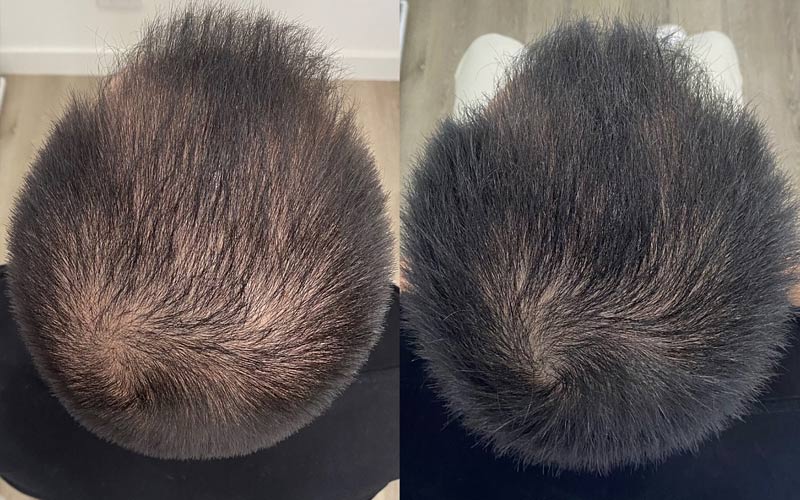
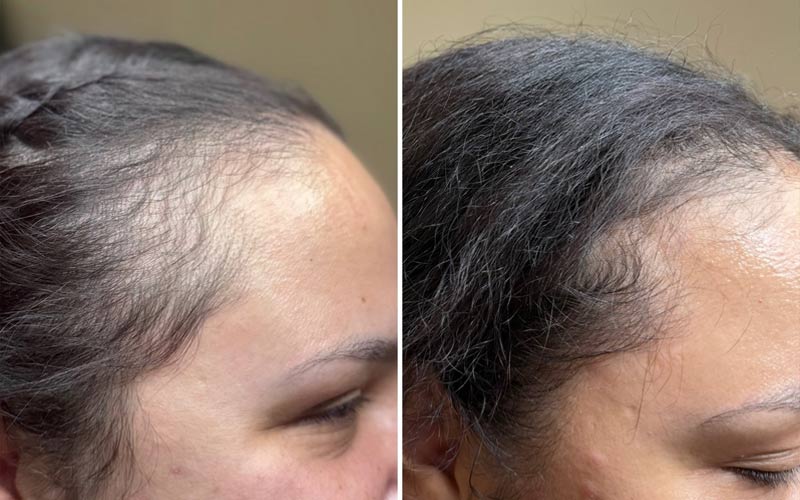
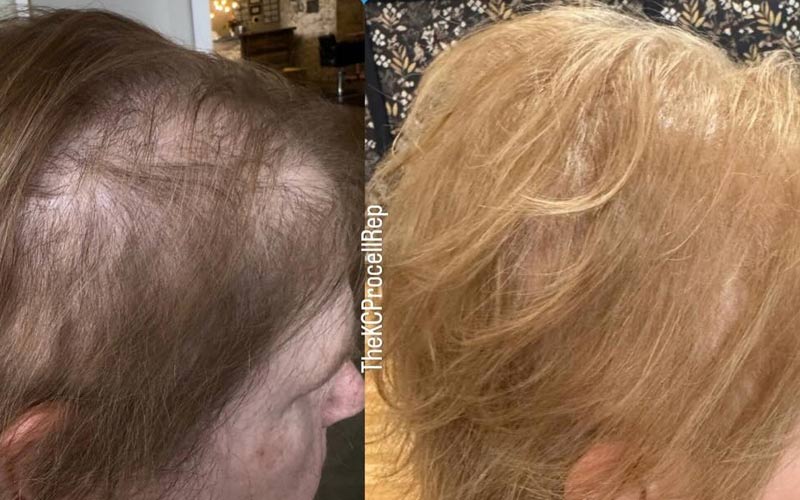
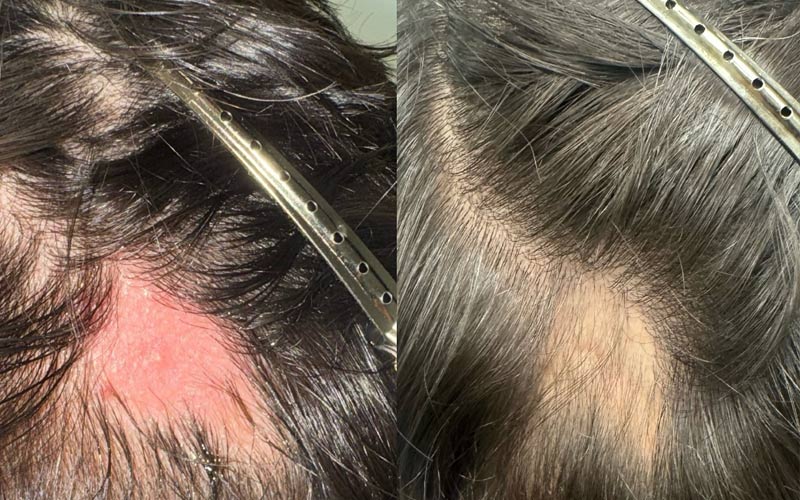
What Real Client Results Look Like
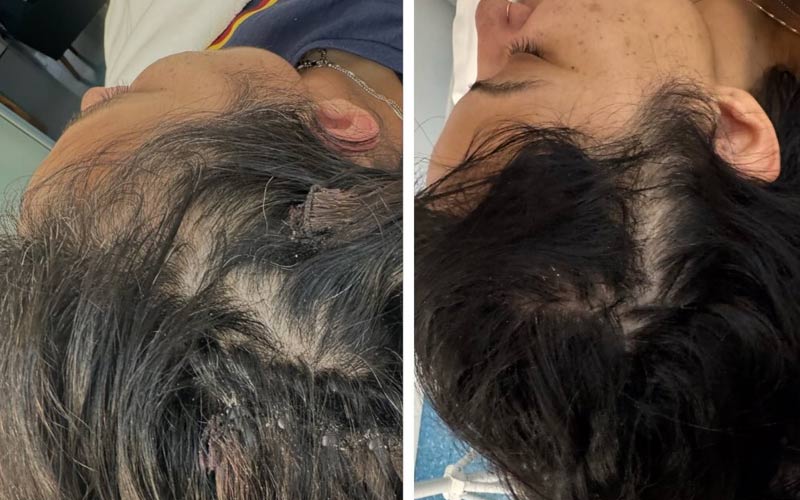
That said, what we see in these real-world cases aligns closely with what the research predicts:
- Improved hair density across the crown and vertex
- Thickening of previously miniaturized hair shafts
- Reduced visible scalp in both male and female pattern loss
Hair follicle cycling has a natural lag. Most clients won’t see meaningful visual change until 3-6 months in, with peak results appearing at the 6–12 month mark. Setting this expectation clearly at consultation is one of the most important things you can do for client retention and satisfaction.
Individual results will vary, and these images are meant to illustrate the kind of outcomes that are possible with a consistent protocol, not to guarantee specific results.
Most clients require a minimum of 6 biweekly treatments before visible improvement. Full results typically emerge at 6–12 months. Maintenance treatments every 4–8 weeks help sustain outcomes long-term.
Yes. Microchanneling at 0.5mm depth on the scalp is well-tolerated with minimal downtime. The main post-treatment effects are transient redness and sensitivity lasting 24–48 hours. Topical anaesthetic is recommended for client comfort.
Yes. The 2024 Dermatologic Surgery study included predominantly female patients (31 of 45), and results were consistent across sexes. Female pattern hair loss and diffuse thinning respond well to microchanneling protocols.
The current evidence favours 0.5–0.6 mm for scalp microchanneling. This depth triggers the wound-healing cascade without over-traumatizing the tissue, and has shown superiority over both deeper depths and topical-only approaches.
Procell uses an automated microchanneling system with a stamping motion rather than rolling. This reduces epidermal tearing and allows more consistent channel depth across the scalp compared to manual dermarollers.
Expect to begin noticing changes at 3-4 months, with more significant density improvement visible at 6 months. Hair follicles operate on a cycle, so improvement is gradual, but it is measurable.